Emergency leak detection in Marblehead, MA
Water you cannot see is leaking, and our line is answered 24/7. Shut off the main water valve if a ceiling is dripping or a wall is wet, and call. Same-day visits are offered when a slot is available.
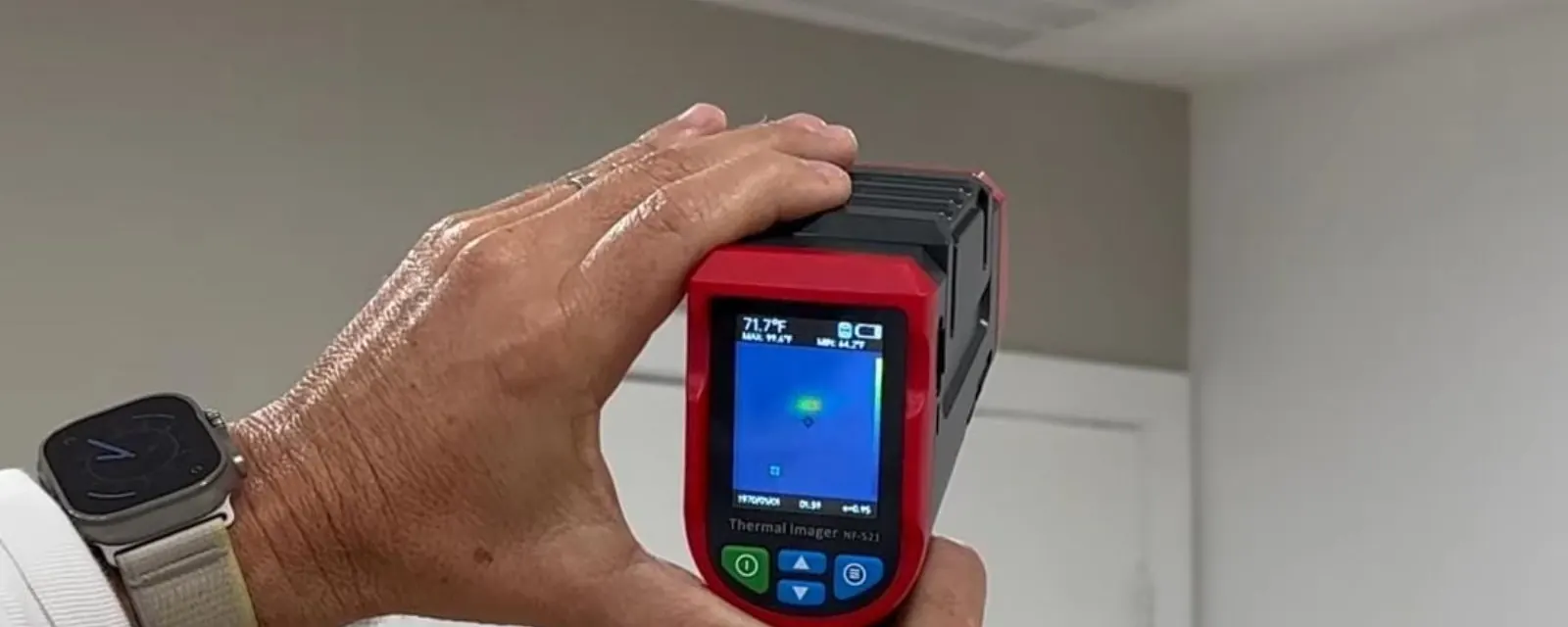
Leak detection means finding the exact location of a hidden leak using pressure tests, listening equipment, thermal imaging and tracer methods, so the repair opens as little of the house as possible. Most callers describe a symptom, not a leak. The meter will not stop turning, the water bill went up, a ceiling stained, or a floor feels warm.
Emergency: active leak and what to do first
Water that is actively dripping through a ceiling or spraying from a wall is an emergency, and the main shutoff is the first move. After that, switch off power to the wet area from the breaker panel, because water and wiring do not mix.
The emergency line answers 24/7, and same-day visits are offered when available. The steps below limit damage while you wait.
- Main valve offTurn the main water shutoff clockwise.
- Power offSwitch off breakers serving the wet area.
- Catch and moveCatch drips and move furniture and electronics.
- Call the lineTell the dispatcher what is wet and where.
Leaks in older, coastal homes
Marblehead's housing stock leans old, and the town's own history notes that building slowed to a stop around 1970. A home from that era or earlier may still carry galvanized supply lines or early copper with old solder. Both can leak at joints after decades of pressure and temperature cycling.
In its published water report, the town says it has no known lead service lines, but a few homes have galvanized iron services that may include a short lead gooseneck connection. The water department can confirm your service material and the year it was installed.
Leak testing follows accepted trade practice, such as isolating a section and holding a pressure reading. Any repair that follows is held to the standards of the Uniform State Plumbing Code, 248 CMR 10.00, so ask for the written finding of where the leak was.
Meter still running with everything off
Turn off every tap, the ice maker and the washing machine, then look at the water meter. If the leak indicator or low-flow dial still moves, water is escaping somewhere between the meter and your fixtures. That test separates a plumbing leak from a toilet or irrigation fault.
A toilet that is silently refilling is the most common culprit, and it is easy to check with a few drops of dye in the tank. If the bowl shows dye without flushing, the flapper is leaking and the fix is cheap.
If every fixture is ruled out, the leak is in a buried or concealed line. The plumber then isolates sections with shutoffs and pressure tests each one.
High water bill with no obvious cause
A bill that jumps with no change in habits is worth a leak check, but billing periods vary, so compare the same months across years first. Ask the water department about the meter reading history, and read your own meter at the same time each day to see a pattern.
Marblehead's water comes from the MWRA, billed through the town. The town's water department can tell you about meter issues, and a plumber can tell you about leaks on your side of the meter.
Suspect a hidden leak?
Call the 24/7 line and describe the symptom.
Wet ceilings, walls and warm floors
A stain on a ceiling under a bathroom can be a supply line, a drain or the shower pan. A warm spot on a slab or under hardwood can be a hot water line. A musty smell in a closet can be a slow leak behind a wall.
We use moisture meters and thermal imaging to map the damp area, then confirm with a pressure test. The access opening is then as small as the repair allows.
Slab, buried and under-house leaks
A leak under a concrete slab or in a buried supply line needs more than a visual check. Acoustic listening equipment hears the sound of water escaping, and a tracer gas test can confirm the spot. Crawlspace leaks are easier to see but harder to reach.
We also look for yard and meter-box leaks, irrigation lines and sprinkler valves, and we tell you when a leak is on the town's side of the meter, which is not a plumber's repair.
What to document for insurance
- Photos of the stain or damp area, with the date.
- Meter readings before and after the shutoff test.
- The plumber's written finding of the source and the date it was found.
- Receipts for repairs and any emergency mitigation.
Leak symptoms and the likely source
Use this table to match what you see with where to look first.
| What you see | Likely source | First test |
|---|---|---|
| Meter moves with taps off | Toilet, supply line or buried line | Dye in the toilet tank, then section shutoffs |
| Bill jumped | Slow leak or running fixture | Compare readings and check fixtures |
| Ceiling stain under a bath | Supply, drain or shower pan | Moisture map and pressure test |
| Warm floor | Hot water line under the slab | Thermal scan and acoustic listening |
| Pooling in yard or at the foundation | Service line or irrigation | Meter test and line isolation |
What affects the price of leak detection
The price depends on how hard the leak is to find. You hear it before work starts.
Homeowners insurance often covers sudden water damage but not the cost of finding or fixing a long-running leak. Ask your insurer which applies, and keep the plumber's written report.
Leak detection questions
Yes. The line is answered 24/7, and a same-day visit is offered when available. Shut off the main valve first if water is actively dripping.
We use pressure tests, moisture meters, thermal imaging and listening equipment to locate the source, so the repair opens a small area.
Check every toilet and the irrigation system, then call. A pressure test on the lines will confirm whether the leak is inside the house or in a buried line.
Sometimes. Options include re-routing a line overhead, a spot repair through a small opening or lining the pipe. The plumber explains what fits your house.
Yes. A written report with the date and source helps a claim. Ask your insurer what they require.
The Marblehead Water and Sewer Department handles the supply to the meter. We tell you when the leak appears to be on that side.
Related help
A leak that has burst a pipe is a burst pipe repair job. A buried supply leak between the street and the house is covered under water service line repair, and a repiped house reduces future leaks, see repiping. We serve Salem and Swampscott too.